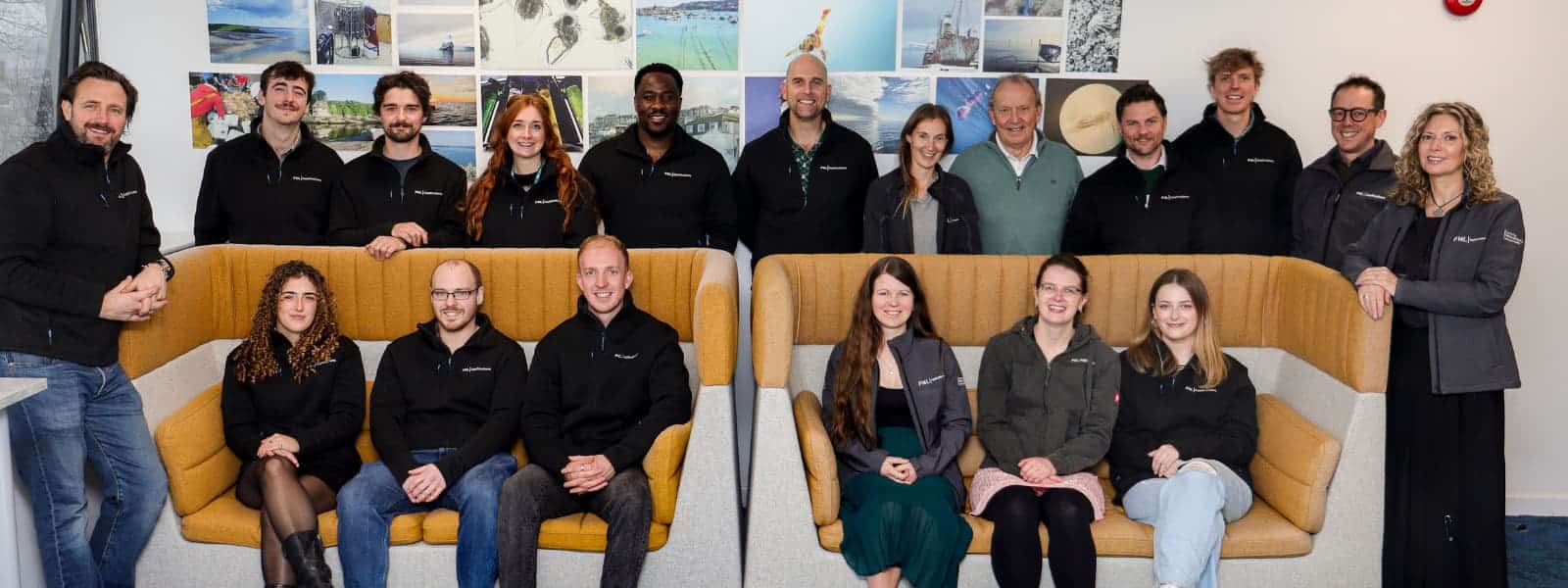
As 2025 draws to a close, we’re toasting to another successful year across our four Centres of Excellence.
Some of the many achievements and highlights included:
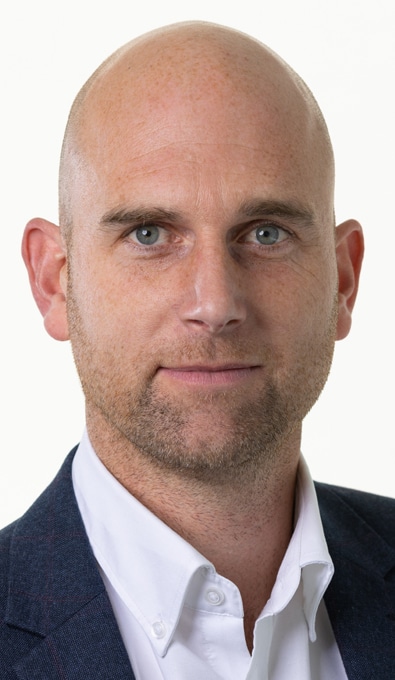
Tom Vance became Chief Executive of PML Applications, leading PML Applications through the year with a clear mission statement – reducing clients’ environmental impact while helping them to understand the marine environment in which they operate. Find out more about Tom and his vision for PML Applications.
Centre for Coastal Technologies
In collaboration with the Carbon to Sea initiative, the Environmental monitoring framework for OAE (Ocean Alkalinity Enhancement) has reached the stage of being open for public review. Comments have now closed and we are looking forward to taking this project further in 2026 to create a robust framework that can safely support moving mCDR (Marine Carbon Dioxide Removal) trials from laboratory to fieldwork.
Sam Fawcett, Manager for the Centre of Coastal Technologies, led this framework and had the opportunity to share it within the industry with a visit to Washington D.C. to present at the Carbon to Sea Annual Convening. His knowledge of mCDR also took him to Vancouver to the Ocean Visions Biennial Conference.
2025 was an exciting year for marine autonomous vessels in Plymouth for several reasons. The announcement to designate Plymouth as the National Centre for Marine Autonomy recognises Plymouth’s unique water testing environments and their suitability for trials.
A second announcement in Plymouth solidified our status as a top testing location for autonomous trials in the UK. As an established provider of marine autonomous trials, PML Applications was elated to see the expansion of trial areas in Plymouth, expanding our ability even further to test in a range of conditions, water depths, and sea states. PML Applications will be working with Smart Sound Plymouth (a Plymouth Marine Laboratory led project) to continue providing expertise in autonomous vessel trials. For more information about the new trial areas in Plymouth, please see the full article.
This year, our team expanded with Guy Hooper joining and bringing knowledge of mCDR, gained from his recent PhD. He has been ready and willing to fully embrace the work that we do here, taking the opportunity to join us for first-hand experience in deployment and trials onboard our research vessel, Plymouth Quest.
Centre for Environmental Solutions
It has been an exciting year for the eDNA team in our Centre for Environmental Solutions. Working with ICF, ABPmer and the Environment Agency, we created an evidence review, a set of recommendations and a roadmap for the use of eDNA to monitor coastal and estuarine fish populations. The work received excellent feedback from the Environment Agency, and Dr Tristan Biggs presented our recommendations and roadmap at the UKEOF UKDNA working group conference. We are currently working on a follow-up project, testing and verifying all available fish primers to recommend which are most suitable for surveying UK fish populations. A primer is designed to ‘stick’ to one type of DNA sequence and ignore others to help scientists collect specific and more accurate data. When performing well, the primer will stick to the target DNA (in this case, fish) and ignore all other DNA in the water (i.e. bacteria, plankton, human, birds ect.)
Our Environmental Solutions team has grown substantially this year. In June, we welcomed Eden Oldfield to our taxonomy and survey teams. Eden previously completed her placement year with PML and PML Applications and impressed us with a combination of hard work, enthusiasm, organisational skills and a talent for taxonomy on a wide range of organisms, from phytoplankton to zooplankton in various global locations, including local fish larvae and benthic fauna. Eden has become a key member of our busy survey team, organising and stepping up to lead surveys. She is also working alongside our invasive species and biosecurity experts on taxonomy of fouling communities and invasive species.
We have recently also grown our eDNA team by welcoming Shauna Corr to our team. Shauna recently completed her PhD on seaweed symbionts at PML, where she impressed us with resilience, quick learning and a super positive mindset. Shauna has made an impressive start to our primer optimisation work, showing excellent technical, organisational and leadership skills, and working effectively with colleagues from the University of Plymouth, Natural History Museum and the Environment Agency.
Our team has spent time out of the office this year, conducting a series of Water Quality Surveys in the South West. We have been out on the water, in all weather, using our precision instruments to collect samples in support of our client’s project. Find out more about how we conduct fieldwork in the Day in the Life article.
After a highly successful proposal, PML Applications will be leading in two areas (or sub-lots) of DEFRA’s Environmental Science Research Development and Evidence (ES-RDE) Framework, namely ‘Clean and Safe Seas’ and ‘Healthy and Biologically Diverse Seas’. Our team and the staff at Plymouth Marine Laboratory (PML), as well as our collaborators at The Marine Biological Association, NiRAS and AVS Dev came together to complete a comprehensive application for the DEFRA RDE framework that proved very successful.
To close the year, the paper ‘Co-benefits reveal the true value of blue ecosystems’ has been published. This study, led by PML’s Dr Olivia Rendon and co-authored by Professor Nicola Beaumont and PML Applications’ Dr Dimitrios Kaloudis, explores the holistic value of key UK habitats such as saltmarsh, seagrass, kelp, maerl, and oyster beds beyond carbon sequestration alone.
Centre for Geospatial Applications
This year, we launched Earth Observation data analysis platform, CORDIAL. With several organisations already using this new platform, our Centre for Geospatial Applications is ready to grow this comprehensive service in 2026. With a multitude of uses, the CORDIAL platform offers a user-friendly experience to draw insightful data from Earth Observation. Find out more about CORDIAL.
With our Earth Observation expertise and capabilities, we rejoined the Copernicus Marine Service’s Ocean Colour Thematic Assembly Centre (OCTAC) and the Copernicus Climate Change Service, delivering global daily ocean colour climate data record.
We are pleased to be able to provide continued support to the Welsh Government with the Welsh Data Cube. Our Centre for Geospatial Applications team members attended a hackathon at the Welsh Government office in Cardiff to explore the Welsh Data Cube with industry professionals.
We embarked on a 12-month project with EUMETSAT to explore alternative, more efficient ways to store and serve Earth observation data. With potentially huge data files to store Earth Observation, it is essential that storage can keep up with EO capabilities. With our knowledge of cloud storage and practical application in CORDIAL, the team is well-positioned to provide information and solutions.
Centre for Marine Biofouling and Corrosion
Much of CMBC’s work is within the defence sector, where we continue to build strong relationships and deliver on projects. With security cleared staff, we are able to take on a range of projects to assist with research into areas of environmental impact and provide data, analysis, and tests.
This year, we expanded our facilities with a new rig for testing in-Water Cleaning. See the video to learn more about how this rig will support IWC trials.
Our team had the opportunity to present an overview of our study into the effects of In-Water Cleaning, at the 2025 PortPiC Conference. The study featured a range of trials to provide data on ‘Biocide and Antifoul Paint particle Release During In-Water Cleaning and Impacts on Marine invertebrates’.
Our corrosion specialist, Dr Tamsin Dobson, is busy conducting corrosion testing in the laboratory flume tank. This project will continue into 2026 and has already led to valuable data for our client. Field-based corrosion projects, material tests and further (lab-based) electrochemical testing are already scheduled for 2026.
With exciting new and ongoing projects for 2026, the team are looking forward to testing and improving our capabilities in areas such as material testing and corrosion/degradation monitoring, expanding services for our Earth observation programme, CORDIAL, and providing services in a range of areas, including marine autonomy.
We wish our clients an enjoyable festive season and look forward to our continuing collaborations in 2026.