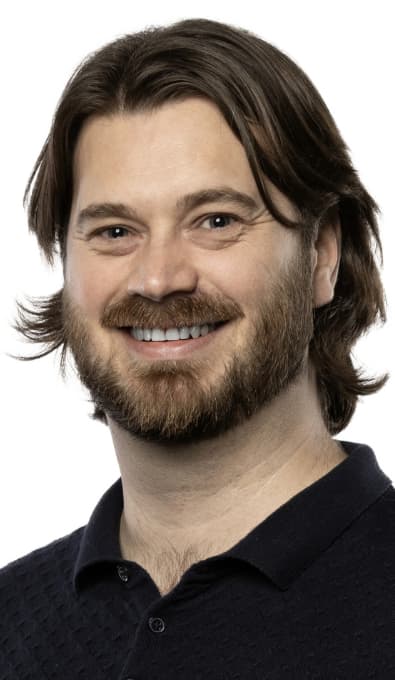
Paul Whitworth is an Applied Marine Scientist at PML Applications, predominantly working on projects for our Centre for Marine Biofouling and Corrosion. His role focuses on ensuring clients’ strategies are met by scientifically exploring treatment methods, technologies, and coatings for optimal biofouling control.
Paul’s previous work includes industrial experience in the water sector exploring mineral extraction, ion exchange, and innovative technologies.
Paul has a degree in Marine Biology from Newcastle University, a Master’s degree in 'Biofuel Production from Seaweed' and a PhD in 'Biofouling Control via UV-C'.
His previous research projects include:
Microbial ecology and performing biomethane production from seaweed (Saccharina latissima).
Hydrocarbon filtration using next generation 3D printed ceramic technology.
Carbon capture and mineral recovery from produced water sources.
Ultraviolet light as a marine growth prevention system:
• Genotoxicity
• Duty cycling, irradiance control and attenuation
• Longevity testing and antifouling efficiency
• Biofouling assessment
Geothermal and salty brine mineral recovery using:
• Membranes
• Ion Exchange resins
• Adsorbent resins
Paul is passionate about turning abstract ideas into practical hands-on solutions. He works in the marine sector to conduct research that actively protects the ocean and makes a measurable real-world difference.
Published Papers:
Whitworth, Paul, Nick Aldred, Kevin J. Reynolds, Joseph Plummer, Phillip W. Duke, and Anthony S. Clare. "Importance of duration, duty-cycling and thresholds for the implementation of ultraviolet C in marine biofouling control." Frontiers in Marine Science 8 (2022): 809011.
Whitworth, P., Clare, A. S., Finlay, J. A., Piola, R. F., Plummer, J., & Aldred, N. (2023). Long-term ultraviolet treatment for macrofouling control in northern and southern hemispheres. Journal of Marine Science and Engineering, 11(12), 2211.
Whitworth, P., Aldred, N., Finlay, J. A., Reynolds, K. J., Plummer, J., & Clare, A. S. (2024). UV-C LED-induced cyclobutane pyrimidine dimer formation, lesion repair and mutagenesis in the biofilm-forming diatom, Navicula incerta. Biofouling, 40(1), 76-87.
Kelly, M. R., Whitworth, P., Jamieson, A., & Burgess, J. G. (2022). Bacterial colonisation of plastic in the Rockall Trough, North-East Atlantic: An improved understanding of the deep-sea plastisphere. Environmental Pollution, 305, 119314.
Eastabrook, C. L., Whitworth, P., Robinson, G., & Caldwell, G. S. (2020). Diatom-derived polyunsaturated aldehydes are unlikely to influence the microbiota composition of laboratory-cultured diatoms. Life, 10(3), 29.
Zhang, Y., Caldwell, G. S., Blythe, P. T., Zealand, A. M., Li, S., Edwards, S., ... & Sallis, P. J. (2020). Co-digestion of microalgae with potato processing waste and glycerol: Effect of glycerol addition on methane production and the microbial community. RSC advances, 10(61), 37391-37408.
Contact
Email: pwh@pml.ac.uk