As a marine environmental consultancy, we spend time out on the water conducting surveys for our clients, whether in an estuarine, coastal or oceanic environment. To ensure smooth delivery and high-quality work, our centres work together as one big team. Team members have their areas of expertise, and they all play a role in planning, organising and conducting fieldwork days.
Here’s an insight into how we conduct our surveys and what actually happens on a fieldwork day.
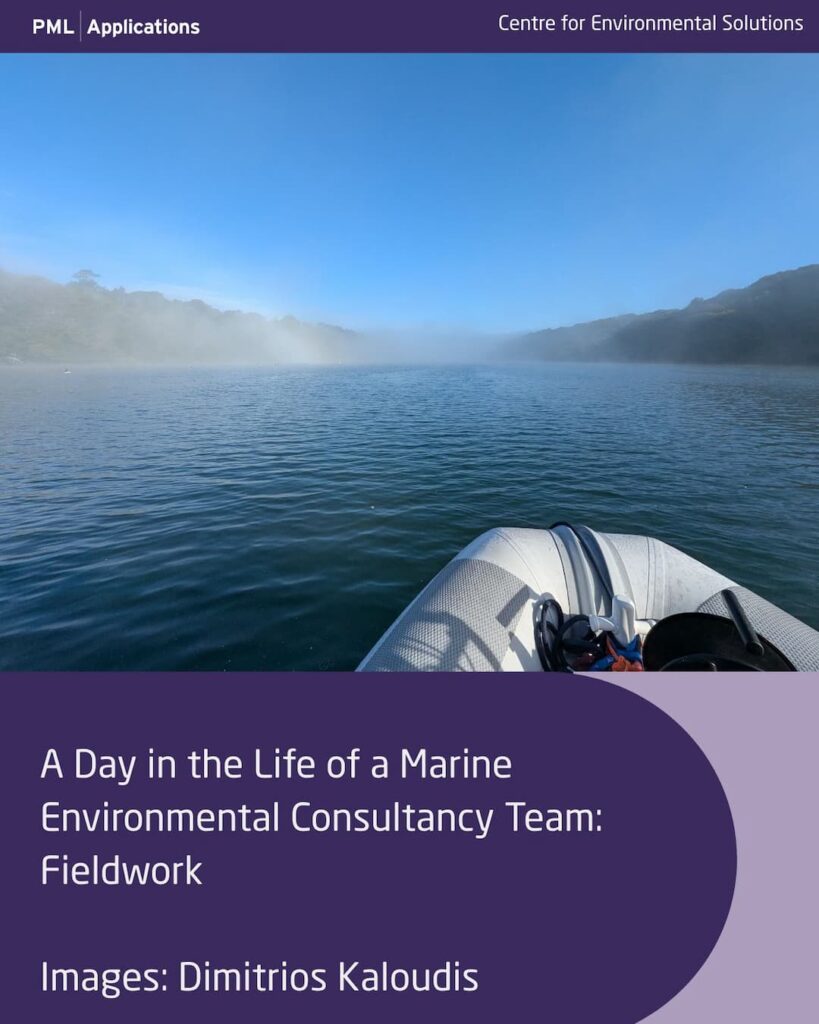
Before Fieldwork
Packing for a fieldwork trip is a little different from going on your holidays! You will need to bring your drysuit and life vest, as you will be spending most of the day out on the water.
Plenty of planning is involved before we even reach the fieldwork day. Kit is tested and calibrated, vehicles and boats are booked or prepared, and staff are allocated to different survey shifts. We have a very long packing list that is triple checked to make sure we have everything we need when we are out on the water, from life vests to boots and sunscreen to flasks of hot squash.
We also need to plan things like going to the supermarket to make sure our team are fed during their trip!
Our team have completed a range of training to ensure the trips run smoothly – this includes boat handling, trailer training (so that we can tow our SIBs and RIBs), a first aid course, and a sea survival course, among others. These certified courses are complemented with comprehensive internal training to make sure clean, precise and repeatable sampling takes place and data is accurately recorded. So many important decisions depend on us providing accurate, high-quality samples, and every sampling trip is different, so it is essential that the team are prepared and consistent.
Before the survey, a few members of our team will have been out on the water, helping design the survey by choosing or suggesting optimum sampling sites, deployment points, and talking to local harbour masters and operators to ensure local knowledge is taken into account early on. Working at sea in the UK can be risky; the weather is unpredictable and the seas are not always friendly. Proper planning helps make sure that the work can be delivered efficiently and with as little risk as possible.
The equipment and processes are tested to check that they are effective and accurate. We have some very high-end environmental sensors that need to be calibrated so they are giving correct readings. It is also a good opportunity for us to measure how long we will spend taking each sample so we can plan our day. We are often working with tides to minimise the variables for each sample.
On the Day of Fieldwork
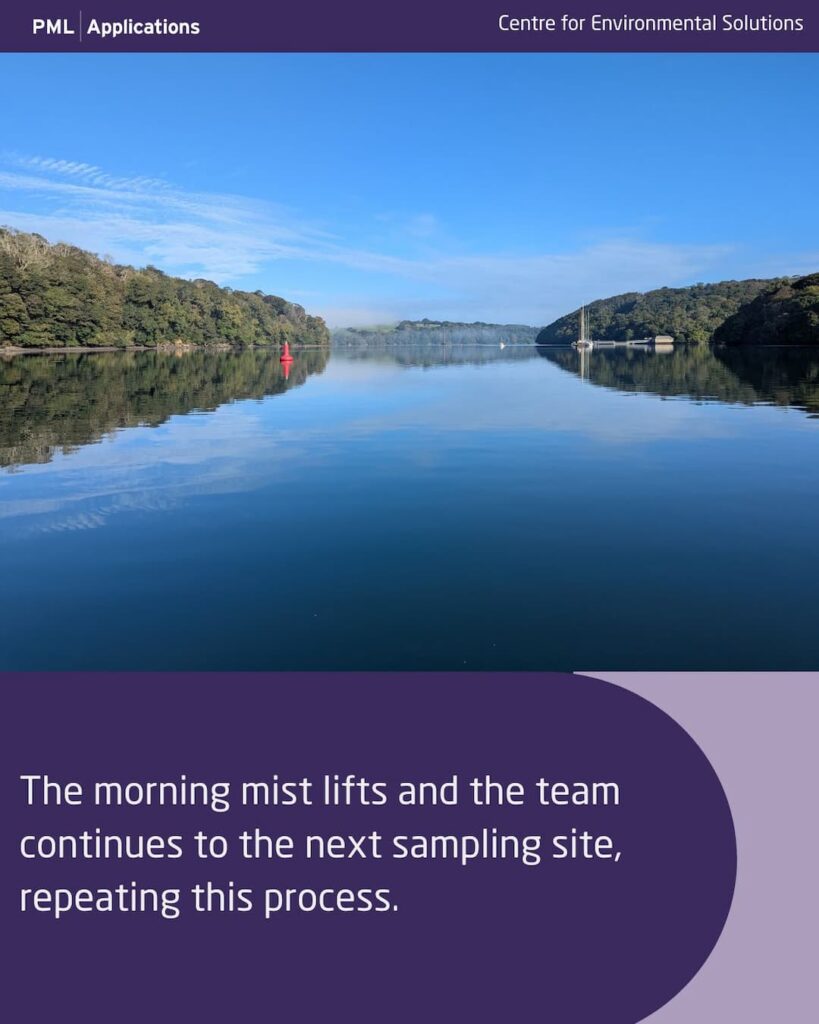
If you are in the morning team, you can expect to be waking up before sunrise so just as you are setting off, the sun is (hopefully) coming up – you might get treated to gorgeous still water, with the morning mist sweeping over it.
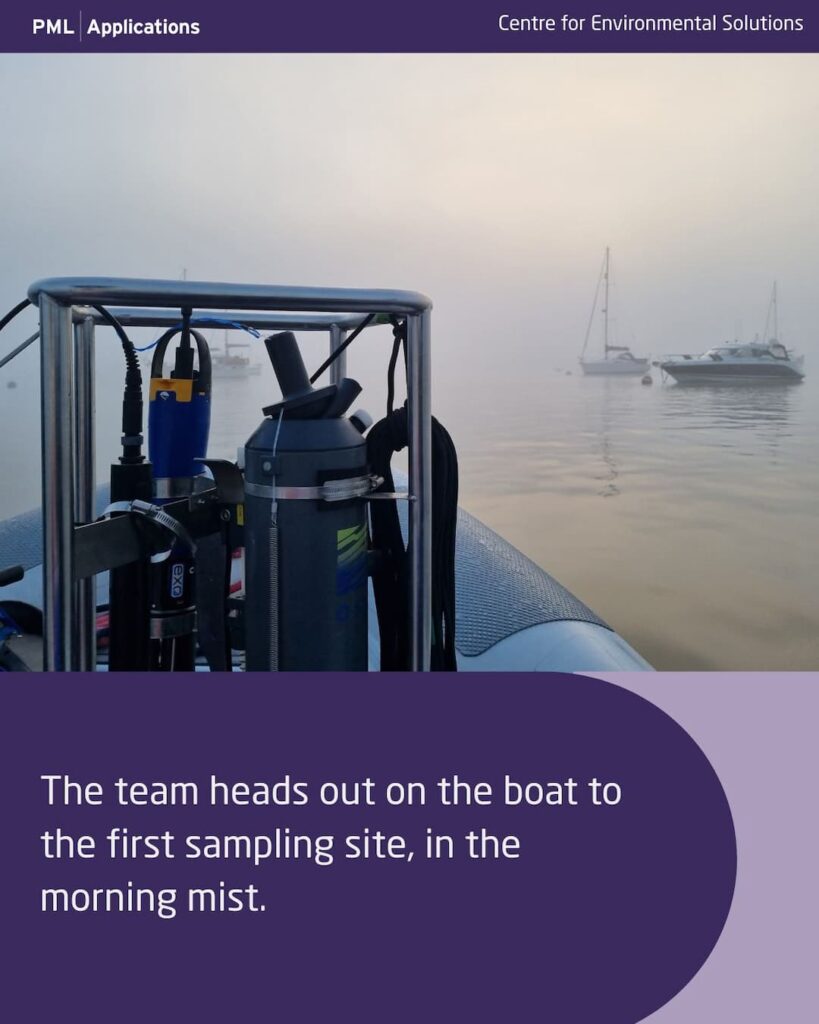
Our team checks they have all the necessary kit to collect their samples, they test the sensors work as expected, and pack plenty of snacks and hot tea to keep them energised throughout the day. Then they head off to their first sampling site.
While we do plan our survey dates by checking the weather forecast, we sometimes have to pick the best of a rainy or windy spell of weather – we are sampling in the UK after all! This means that sometimes the water is a little choppy or we are out in the rain so making sure our kit is secured and that we are wearing the right gear for the weather is essential. That means jackets in summer and drysuits, thermals and lots of socks in winter.
Once we reach the first sampling site, we use our bespoke-built sampling frame to lower our sensors and water samplers off the boat. Once the kit is at the correct depth, the water sampler snaps shut and this collects a ‘slice’ of water.
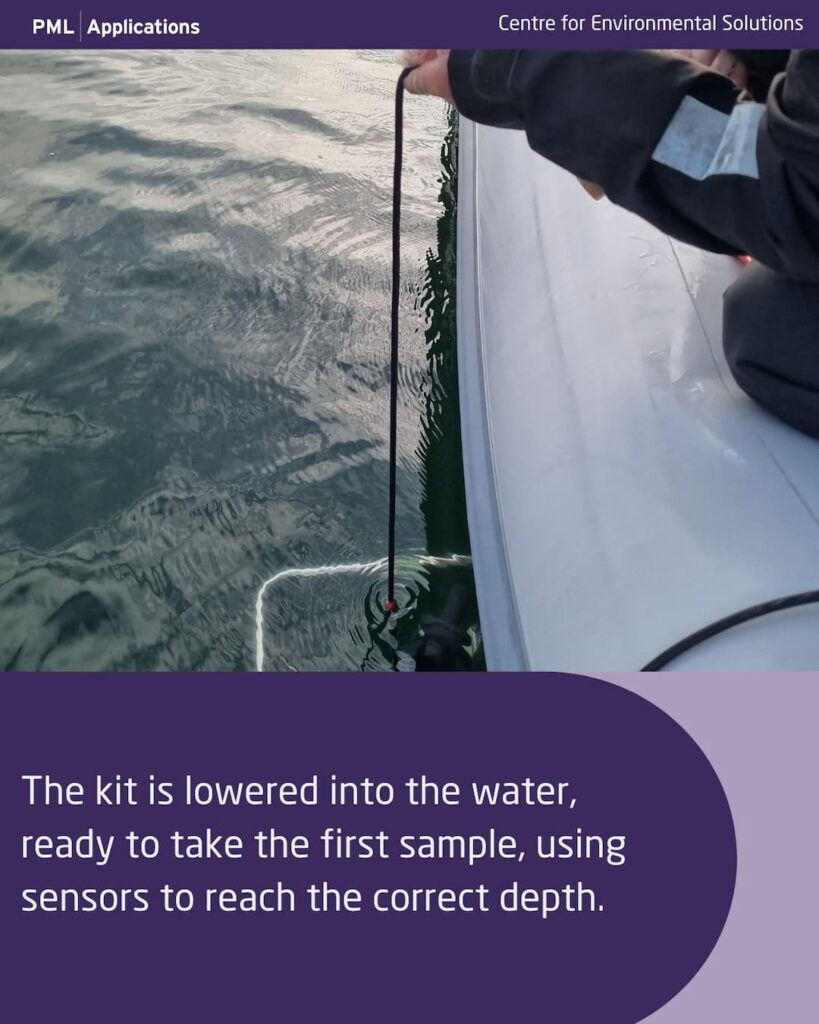
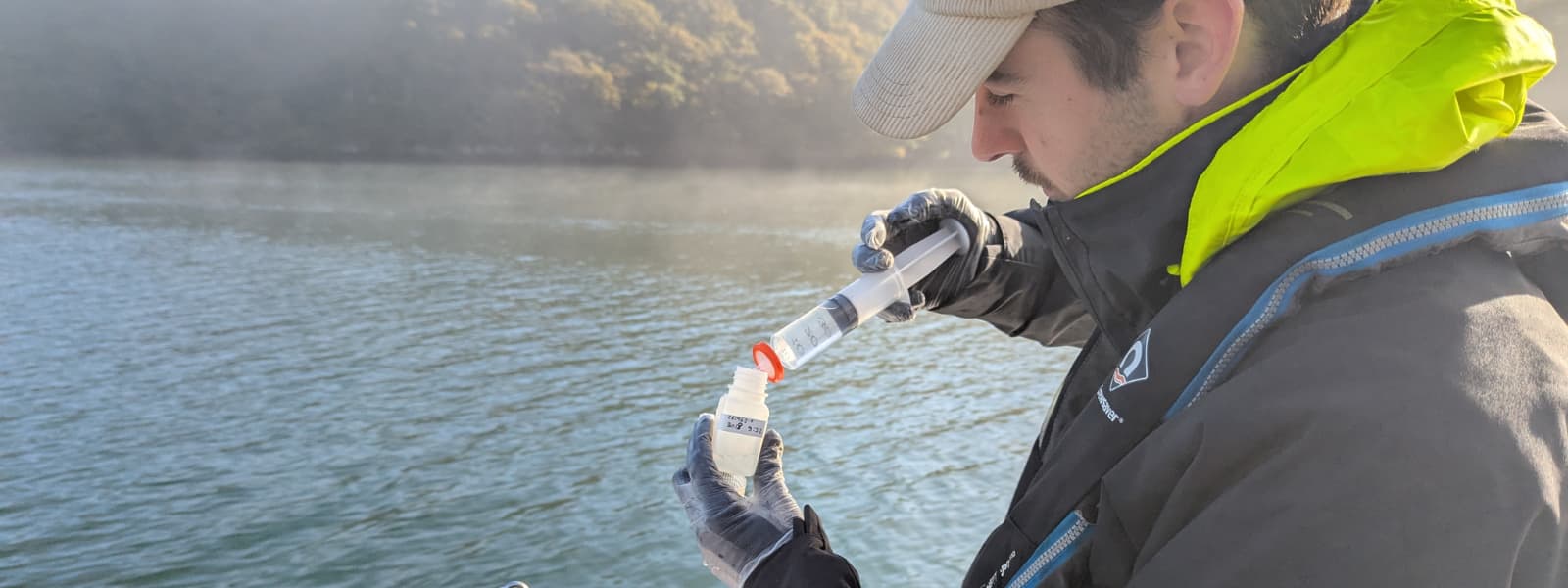
We gently pull the rig up into the boat and decant, filter and store the sample into different containers, ready to be processed when we are back on shore. Accurate data on the time, depth and location of sampling, as well as the key environmental parameters are also recorded by hand on waterproof paper to ensure there is a backup in case of any data being corrupted or lost.
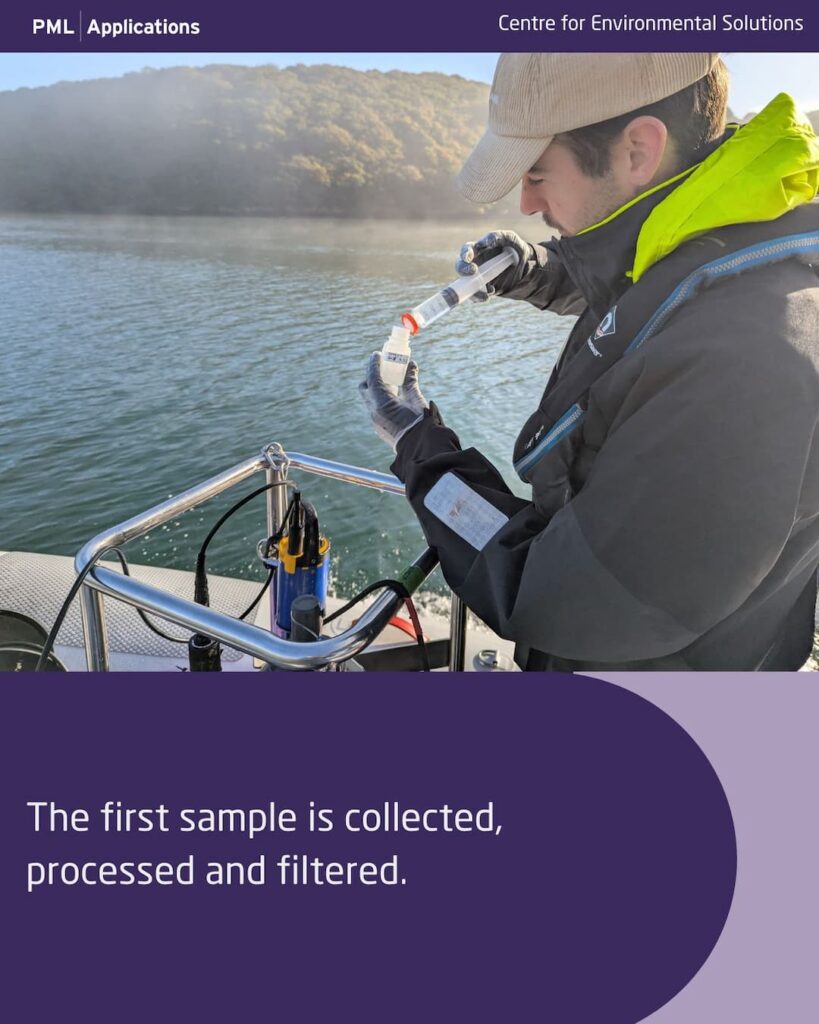
We then travel to the next survey point and repeat. After a couple of hours on the water, it is time for a tea and snack break to ensure everyone is working their best and feeling refreshed. We might even stretch our legs on land if it is particularly choppy.
After Fieldwork
After the survey, work isn’t over yet. We need to quality control recorded data, process the samples and store them – sometimes they need to be stored in a fridge or freezer in order to preserve them until we get back to the lab.
The samples are processed, recorded, and hand-written data and labels are quality controlled, digitised or downloaded. We provide the data and analysis to our client; we quality check everything again the week after the survey, before the final version is passed along to make sure no errors are present.
All the kit needs to be cleaned to ensure it doesn’t get damaged by any residual debris or water and it needs to be correctly put away so it is ready for next time. Seawater is surprisingly corrosive to equipment if not properly maintained. Often, we are carrying out a series of surveys to provide data for comparison, so the process of planning begins again as we get ready for the next survey.
If you would like to conduct a survey with us, contact Dimitrios Kaloudis at dka@pml.ac.uk to discuss your requirements.