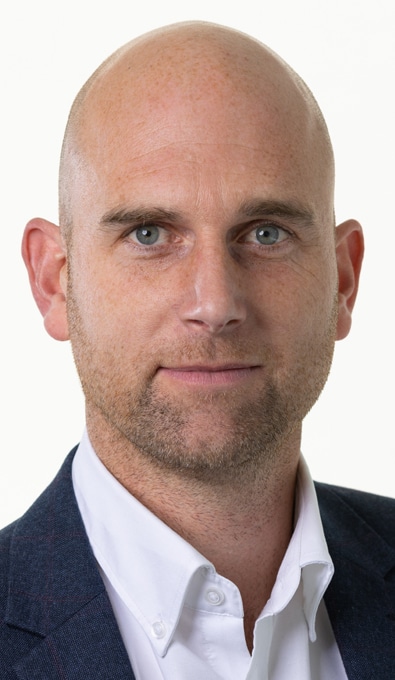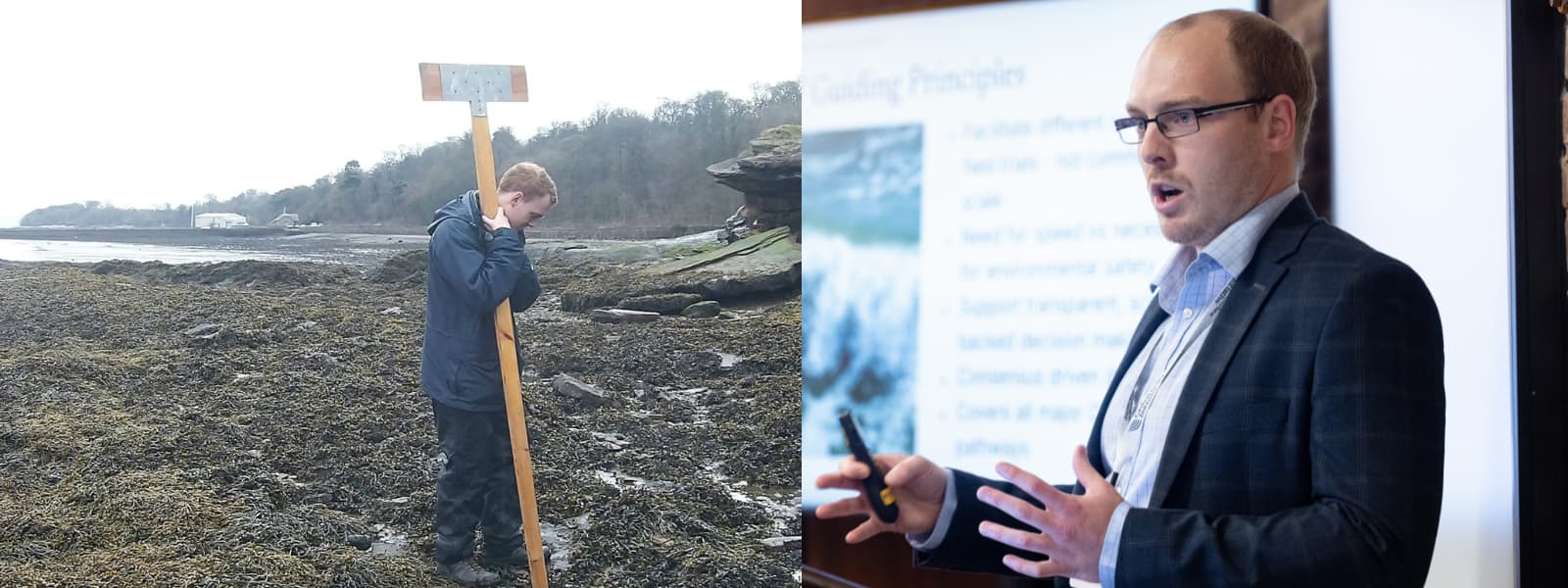
Sam Fawcett, Manager of the Centre for Coastal Technologies at PML Applications, says he always knew he wanted a career in marine biology. He talks us through how his aspirations became reality as we discuss where it all started and the exciting projects he’s currently working on.
Sam’s impressive career journey saw him go from university graduate to manager of the Centre for Coastal Technologies at PML Applications before reaching the age of 30, but it wasn’t a completely direct path.
How did you start your career in marine science?
“I’m one of those people who always knew they wanted to do Marine Biology as a career path, so this was the only route I really pursued coming out of school. I selected Newcastle and Stirling University as my two choices, and despite realistically only just scraping my way into the University of Stirling with my A-level grades, I really started to flourish once I got there.
I discovered an interest in genetics by accident. We chose our dissertations by selecting from a list of projects provided to us but the one I selected was oversubscribed; as a result, the lecturer emailed suggesting it might be better to change topics, and at that moment, I decided I wanted a challenge, so I picked the title with the fewest words I understood – ‘Exploring the inheritance of residual tetrasomy in the telomeric regions of the Atlantic salmon genome’, translated to plain English – looking for evidence of a unique genetic mutation event in specific areas of salmon DNA strands. My wonderful supervisor, John Taggart, was endlessly sympathetic to what we jovially referred to as ‘stupid questions’ – “Go away and come back with lots of stupid questions” was a common end to our meetings with each other (the fact that he had a strong Irish twang may have helped with the delivery of this particular line).
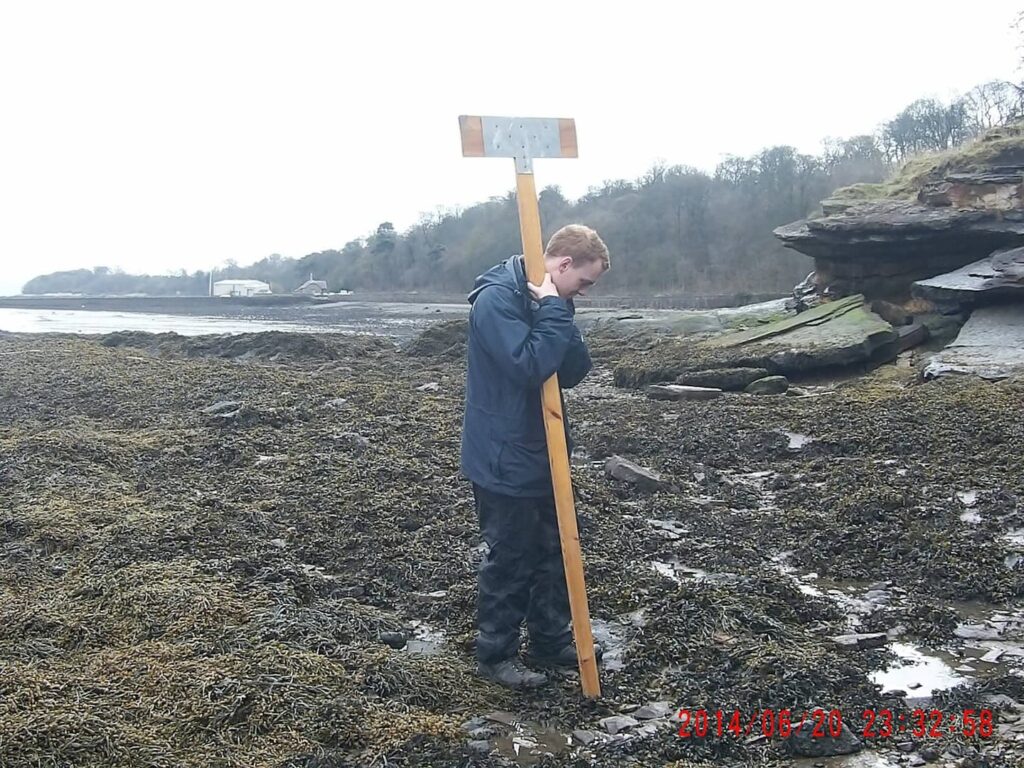
Sam completing university fieldwork, measuring the gradient of the beach
After finishing my degree, I actually worked as an accountant for a year. I joined a temping agency and just happened to land a fixed-term contract. It didn’t take much time to realise it wasn’t for me, so I saved up over the year to fund my master’s course. Although accounting certainly wasn’t my passion in life, I did learn a great deal of skills that are still useful to this day in financial numbers and Excel. When you break down science and accountancy into their most basic forms, what you’re doing in both instances is taking complex data and presenting it in a way that’s understandable by others… or so I would tell myself at the time but I do think it’s true!
When it came to master’s degree choices, I only had eyes for the MRes programme at the University of Plymouth. I really wanted to get back to what I enjoyed most – molecular biology. The MRes programme was quite unique, as although it was a University of Plymouth course, much of the teaching was given by the Marine Biological Association, another stellar marine research organisation. My master’s project took a slightly different focus, looking at bacteria and how they could use environmental DNA (eDNA) as a food source. I found the concept of eDNA fascinating as a tool for monitoring the marine environment, using biological material left behind by marine organisms to detect their presence rather than relying on actually seeing them.
I developed a skill for clean techniques for growing bacteria in that project that helped me to get my job at PML Applications. At the time, PML Applications had a department called the Ballast Water Testing Centre, for testing and validating the functionality of ballast water treatment systems. A key part of this was ensuring bacteria were killed in the treatment process, and my first job in PML Applications was to verify this.”
Credit: Allison Shelley
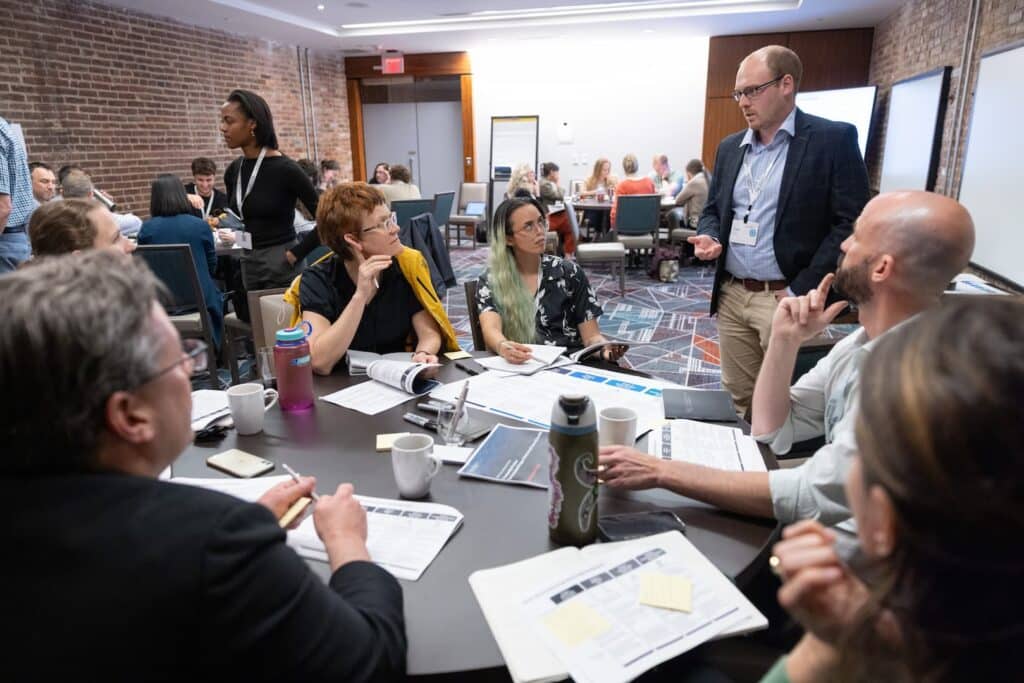
Sam at the 2025 Carbon to Sea Annual Convening
How has your career at PML Applications developed?
“At the very start, I worked part time in PML Applications whilst I finished my master’s degree but I’ve been full time here for over six years now. I have worked across quite a few topics during my time at PML Applications. There’s so much going on here that it would be hard not to! There’s a huge diversity to the projects as well but now, as the manager for the Centre of Coastal Technologies, I mainly cover marine technology R&D, marine carbon dioxide removal and lots of opportunities for boat work.
My role has changed significantly since starting at PML Applications – I think it’s fair to say I’ve definitely worked my way up over the course of my time here. I started as a research assistant with my time split between ballast water testing and field support for our Centre for Marine Biofouling and Corrosion. This changed slightly towards the end of COVID lockdowns when ballast water testing grew, becoming my full time role, and continued until PML Applications decided to stop doing ballast water testing and pursue new opportunities. This was around April 2022, when Smart Sound Plymouth was really gaining momentum, focusing on marine autonomy and technology trials and evaluation. Smart Sound Plymouth is a Plymouth Marine Laboratory (PML) led autonomous technology testing range. The decision was made to start a PML Applications centre dedicated towards this, and so Tim Fileman and I worked to establish the Centre for Coastal Technologies. Over the next 3 years, we began to see success in this area, and since last year, I have led the centre, following Tim’s retirement, and have seen continued success. I also now have a role as Head of Commercial for Smart Sound Plymouth and split my time between the two.
I had already had a taster of what it was like to lead projects when, in late August 2022, we were gearing up to conduct scientific monitoring for the world’s first field trial of Ocean Alkalinity Enhancement and I took over the leadership of the team when Tim was unable to join. This was such an amazing project to be a part of, let alone lead and I’m very grateful for the trust that was given to me for taking this on. I was lucky to have an amazing team of people on that project and some of the best weather conditions, which helped immensely. The project generated significant results and Vasillis Kitidis’ exceptional work led to the authorship of a nature communications and established a key part of the Centre for Coastal Technologies.”
Credit: Allison Shelley
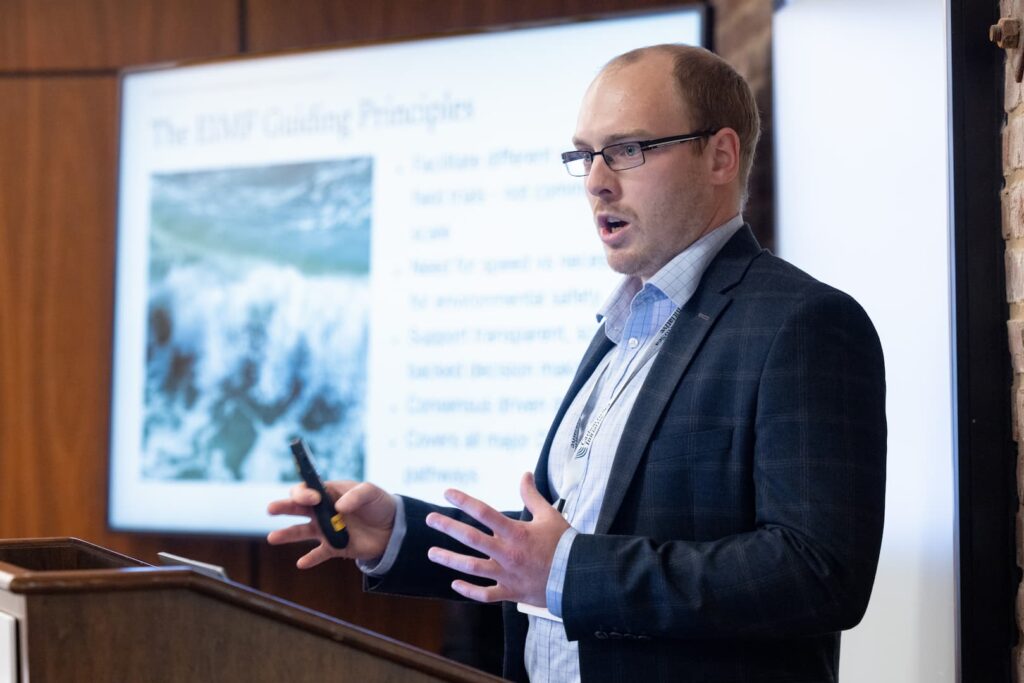
Sam presenting at the 2025 Carbon to Sea Annual Convening
Is there anything in particular you are excited about for the future of PML Applications?
“I’m really looking forward to the development of the Centre for Coastal Technologies and building the team for it. The best part of PML Applications is the people we work with, who you are around day-in-day-out makes such a huge difference, no matter what stage of your career journey you are at. We’ve had some amazing success so far and done some really high impact projects as well. I think there is huge potential in what we are trying to achieve, and who knows just how big it can grow.
I also think we’re at a really important stage in the development of Smart Sound Plymouth. Up to this point, we’ve mostly done ad hoc testing and trialling, whereby a company will approach us to do a discrete project. What we are now adding is a structured programme of the methods and processes we have developed for systematically evaluating and assuring autonomous platforms. I’m proud to think this progress is enabled by the trust the industry has in Smart Sound Plymouth and our ability to perform these trials.
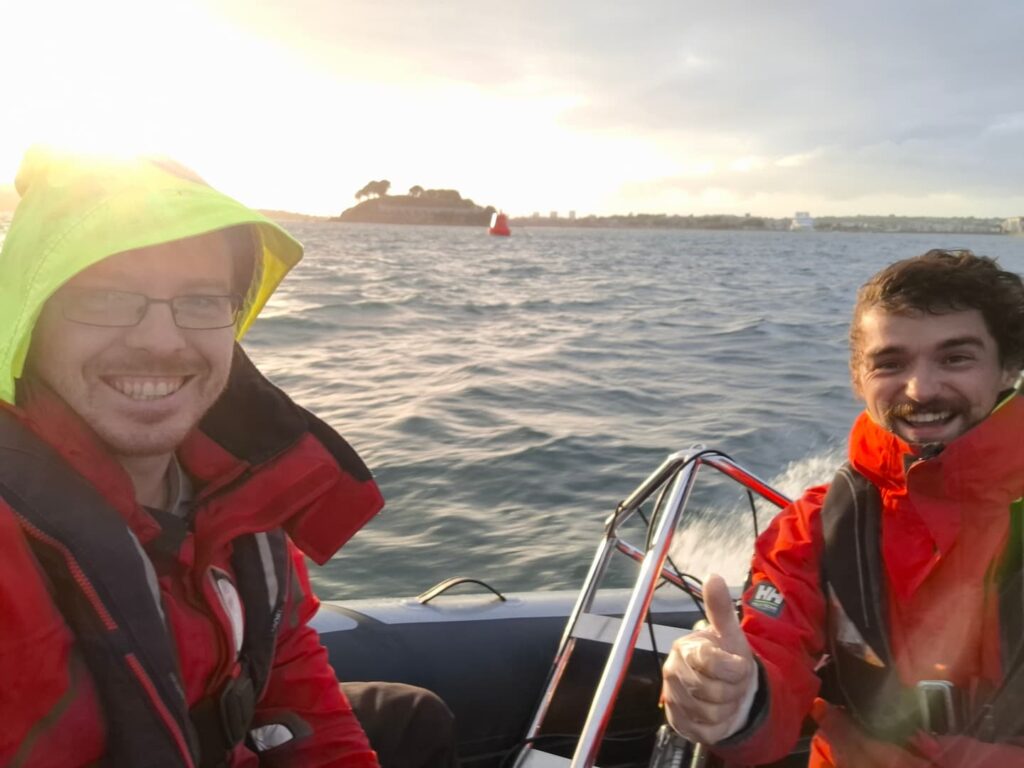
Sam on a survey with Tom Rees
Whether you are a developer of autonomous systems or a user, I think ultimately it all comes down to trust. As a developer, there will come a moment when you have to put your platform that you have worked hard to develop in the sea for the first time, and there’s always going to be that little voice that says what if this doesn’t work, and it gets lost. It’s in these moments that you have to have full trust in the system you have created and commit to your trial. At PML Applications and Smart Sound Plymouth, we regularly help people with this process, minimising risk by providing guidance and controlled testing.
Alternatively, if you are a potential user of autonomous systems, you need a way to build confidence in the systems and the data they provide. Industries need to adapt to allow the use of marine autonomous systems and create frameworks that permit their use to provide data and answer questions about the marine environment. This will require a change from traditional ship-based manual methods, which is a big step, but it’s one we all need to embrace – and it is something we are embracing and investing time and learning into at Smart Sound Plymouth.
This will also be strengthened following the designation of Plymouth as the UK’s National Centre for Marine Autonomy and I’m really looking forward to seeing how my role as Smart Sound Plymouth Head of Commercial will contribute towards this national ambition.”
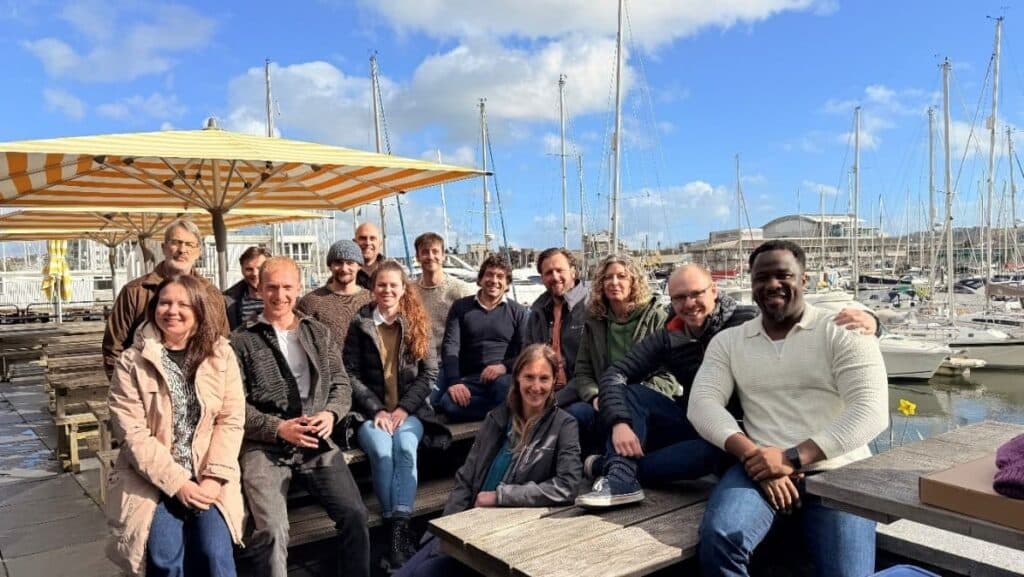
PML Applications Team
Finally, we wanted to know more about how Sam spends his time outside of work.
“Outside of work, my time is often spent doing DIY on the house; many a Monday morning has been spent telling my colleagues about the mishaps of the weekend, with, thankfully, only one hospital trip thus far!
In the summer, I much prefer to spend my time outdoors, particularly spearfishing or exploring the beautiful coastline of Devon and Cornwall.”
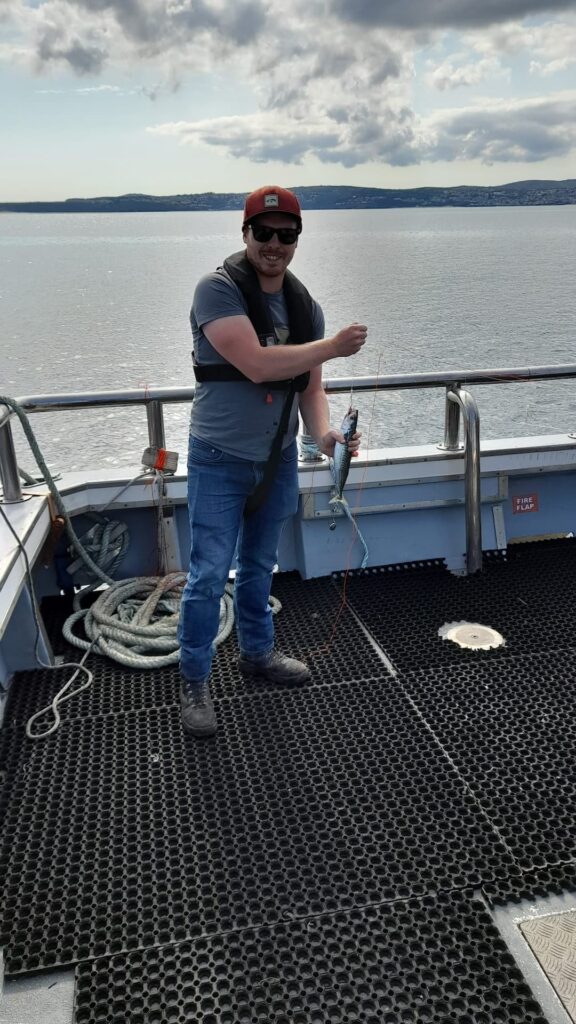
Sam, fishing
Sam has plenty of exciting projects on the horizon to add to his already impressive previous achievements. With high-level work in the fields of marine autonomy and mCDR, among others, it will be great to see where the Centre for Coastal Technologies at PML Applications goes next.
To work on a project with Sam and his Centre for Coastal Technologies team, contact him at saf@pml.ac.uk.