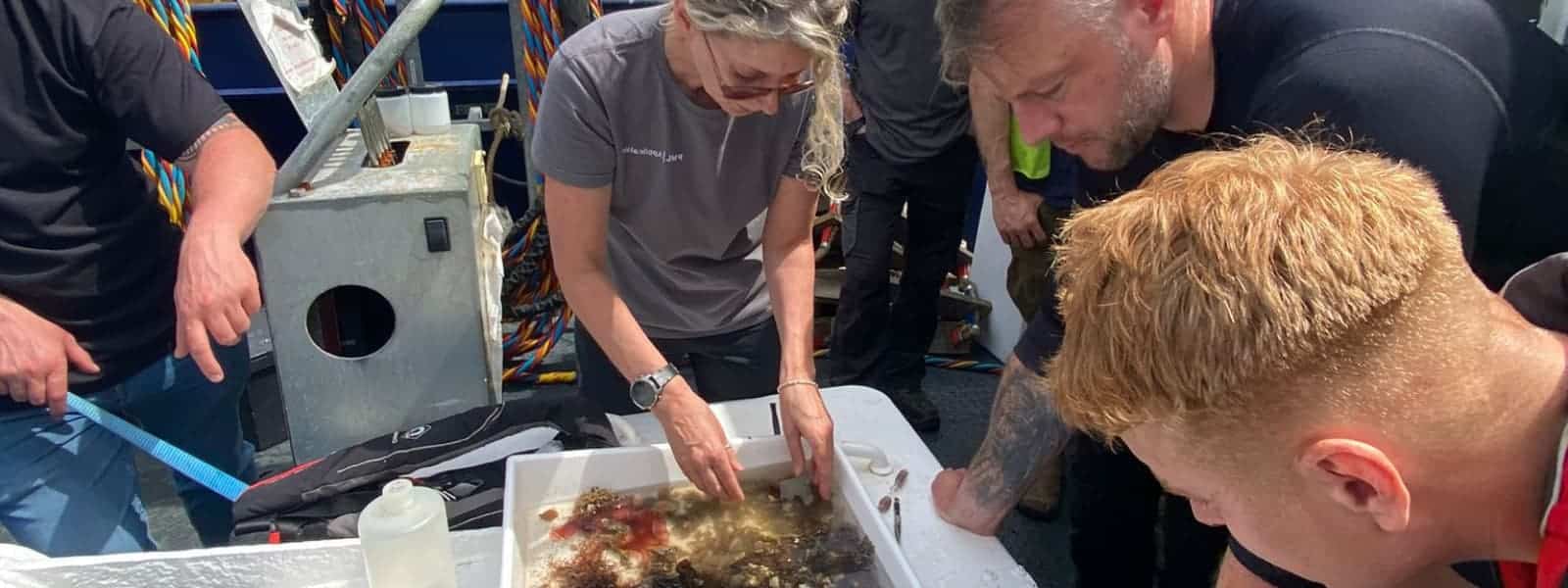
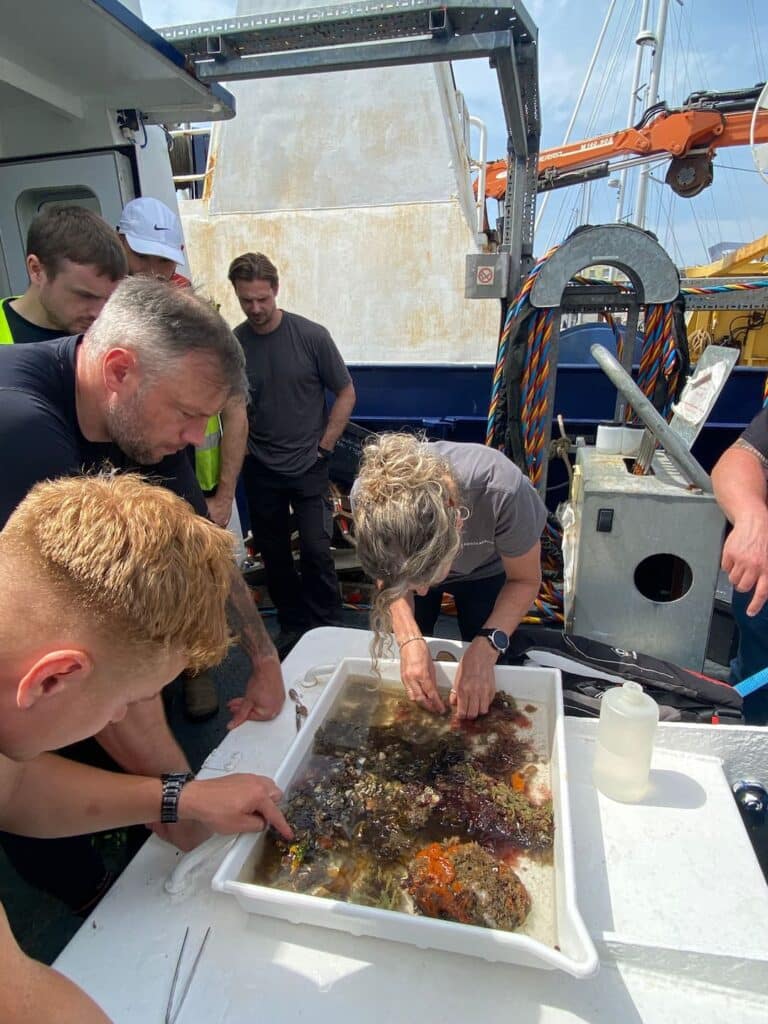
The first participants of PML Applications’ innovative UK diver biosecurity survey training course learned how to conduct underwater biological surveys to search for non-native species that may have ‘hitch-hiked’ a ride from overseas by attaching to underwater surfaces. These species may pose an economical or environmental threat on arrival in UK waters, so work on identifying and controlling these species is vital.
Developed for the Ministry of Defence (MOD), working with the Defence Nuclear Enterprise (DNE), the course teaches commercial divers already experienced in inspecting and carrying out maintenance work on Royal Navy vessels to carry out underwater biological surveys of vessels returning from overseas deployments.
The course develops skills in assessing general biofouling, a problematic phenomenon that not only carries a biosecurity risk, but also increases fuel consumption, causes corrosion and could block vessels’ seawater cooling systems that are crucial for maintaining habitability and combat readiness of the Royal Navy fleet. This first level of training is also crucial for international compliance, ensuring preparedness for existing and anticipated incoming national and international biosecurity regulations.
Anna Yunnie, PML Applications’ Principal Consultant, who developed and delivered the course, said –
“It’s a testament to the MOD and DNE that they are instigating training for divers to carry out this work and taking active steps to protect the UK marine environment. Together with the Biosecurity Management Plans that we helped them write last year, these departments are leading the way and preparing for incoming International Maritime Organisation (IMO) regulations that will inevitably require all maritime industries to take proactive biosecurity measures to protect our waters and enable entry into all international Ports.”
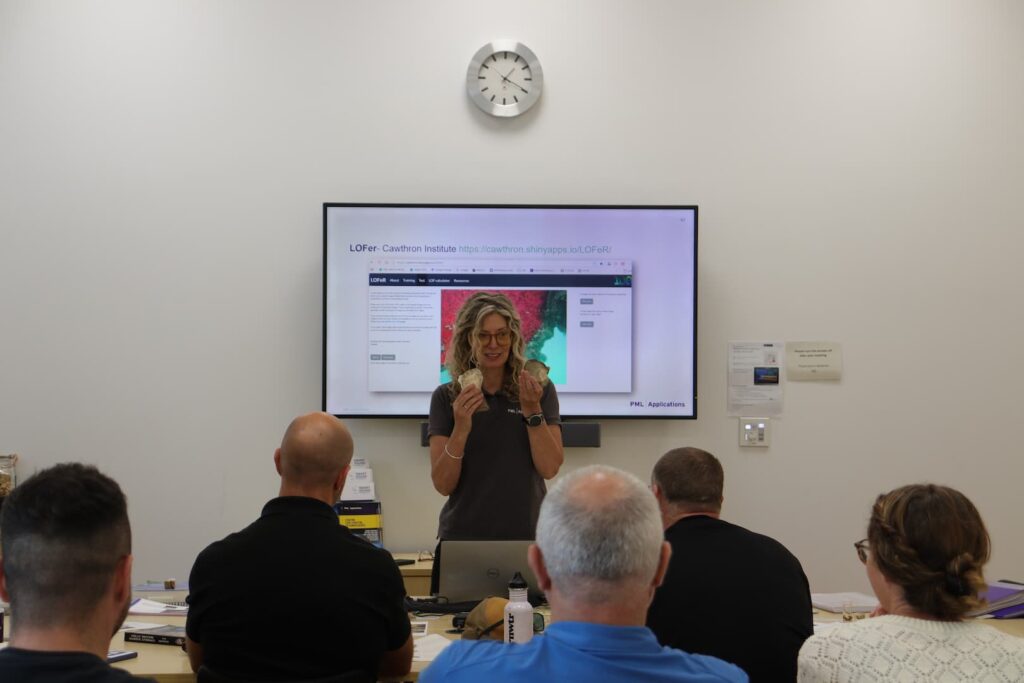
Divers from the National Armaments Director Group Salvage and Marine Operations (SALMO) team attended the first day theory session at Plymouth Marine Laboratory alongside two divers from Shearwater Marine Services. Topics covered included policy and Royal Navy specific fouling issues, and the identification of fouling groups, local species and particularly problematic species to look out for.
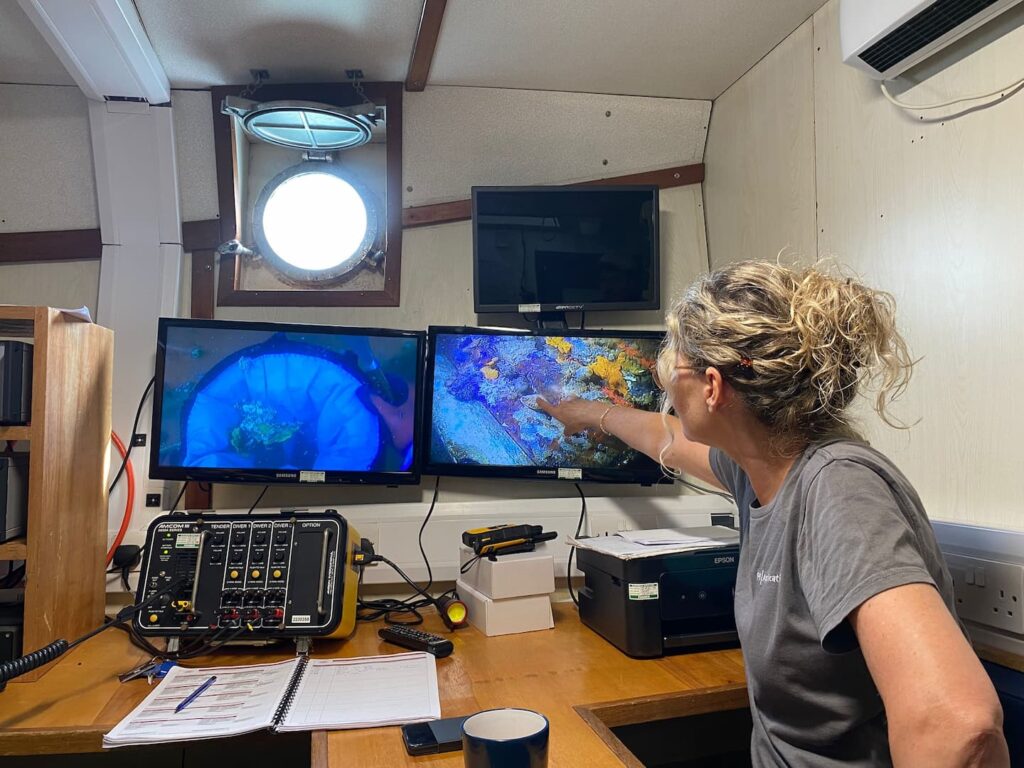
The second day of training focused on practical experience and on applying new knowledge and skills. The diving segment of the practical session was run from Shearwater’s vessel, Sea Vigil. A survey of biofouling was undertaken by the divers on Plymouth Marine Laboratory’s research vessel, Plymouth Quest, with kind permission from the Sutton Harbour Master.
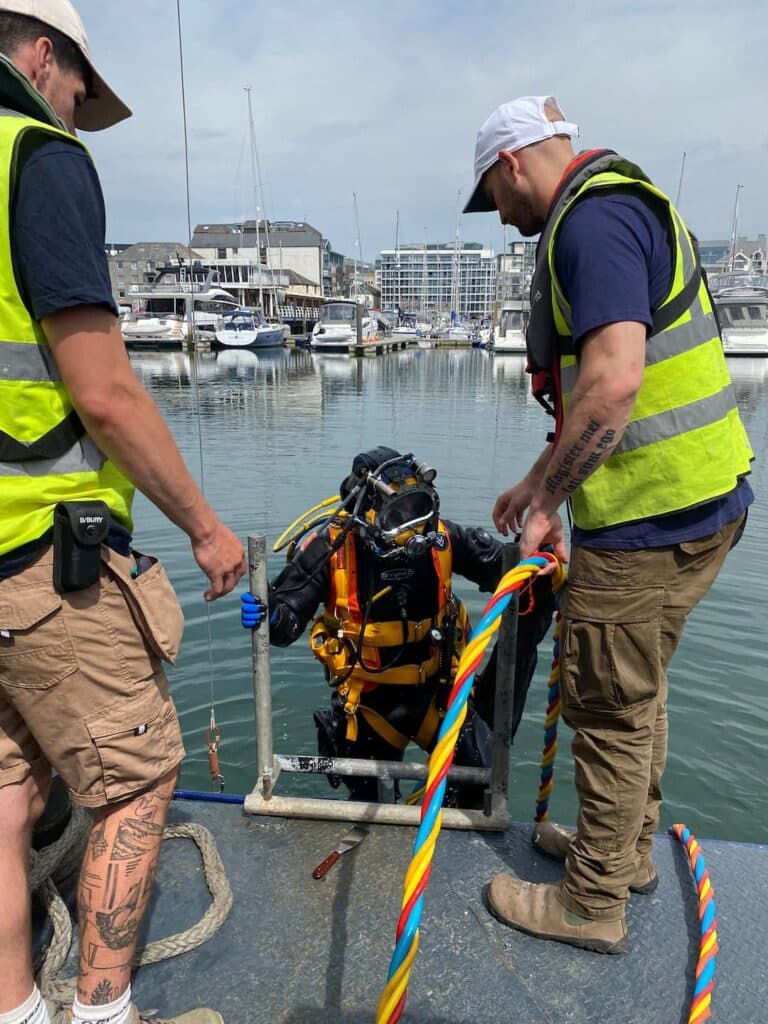
Shearwater participants Ross and Luke completed the full two day course and are the very first divers to complete the UK Level 1 biosecurity survey training course.
Anna added –
“I really enjoy working with professional divers and it was great to meet the teams from MOD Salvage and Marine Operations and Shearwater this week. I know it can be out of some divers comfort zone to be taken into a classroom to talk about sea squirts and bivalves and bryozoans so I was really pleased by the enthusiasm and engagement of this group during the training exercises.”
If you would like to participate in any of PML Applications’ Biosecurity Survey Training Courses, please contact Anna Yunnie at anyu@pml.ac.uk.
Interested in developing a new training course with PML Applications? With experts across a range of marine environmental subjects, we share our knowledge and that of our colleagues at Plymouth Marine Laboratory in a range of courses and training opportunities. Contact us at forino@pml-applications.co.uk to discuss your training requirements.